
Design systems creation (App and website)
Full design system creation for a car-maintenance app
3. The challenge
The absence of a design system meant the redesign risked becoming fragmented unless we established a strong foundation early. The absence of a design system introduced several barriers, including:
Inconsistent UI patterns across teams and platforms;
High design and development overhead due to repeated work;
Lack of accessibility guidelines and semantic structure.
One of the biggest hurdles was the required speed and the need to keep multiple teams aligned while ensuring the system would scale for future use cases. Key challenges were to properly adapt the brand guidelines for two app themes and to ensure both of them met accessibility requirements.
We also needed to validate the system thoroughly through testing to ensure the foundations were solid and that we had addressed the right problems in the right way.
2. My role
I owned the end‑to‑end process of building the system: auditing the existing product, defining design foundations, creating components, documenting usage and establishing long‑term governance. I partnered closely with engineering, marketing and product teams to ensure the system aligned with both the redesign vision and technical constraints.
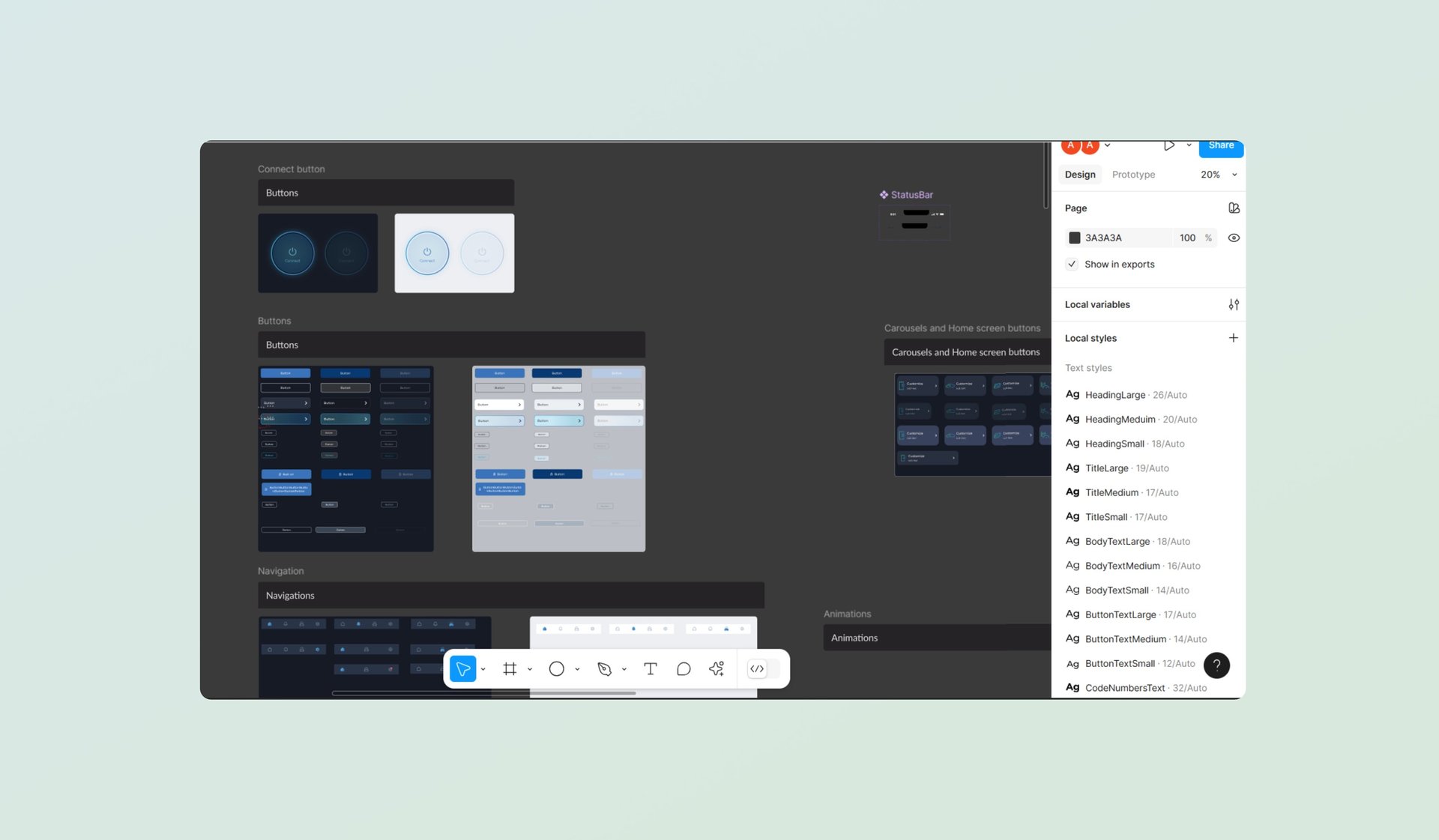
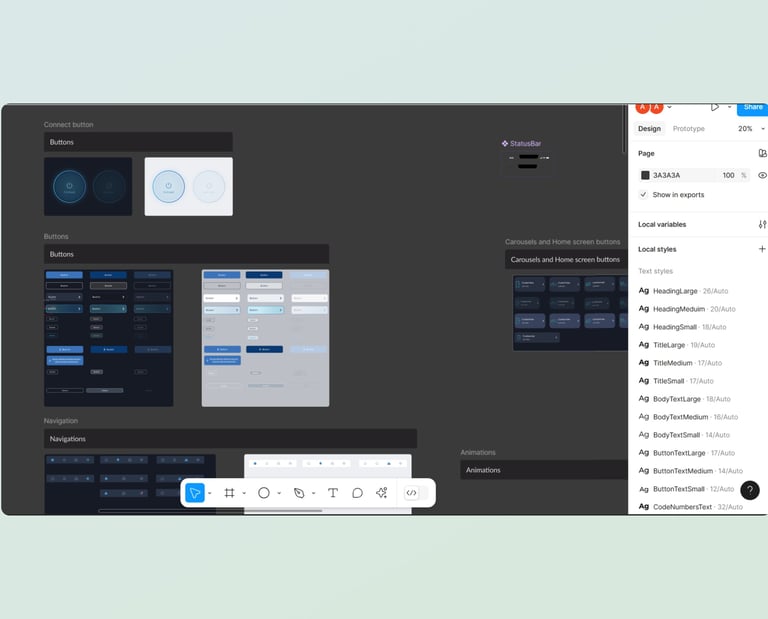
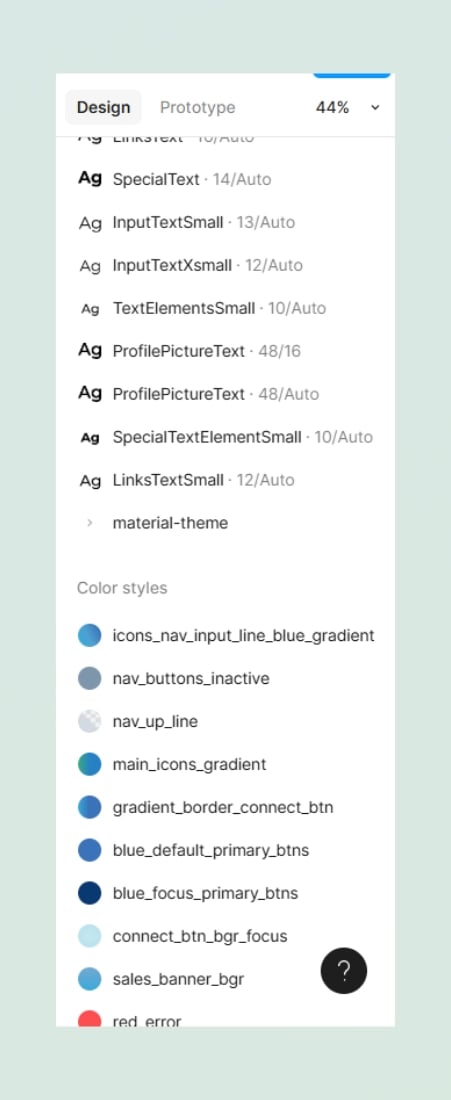
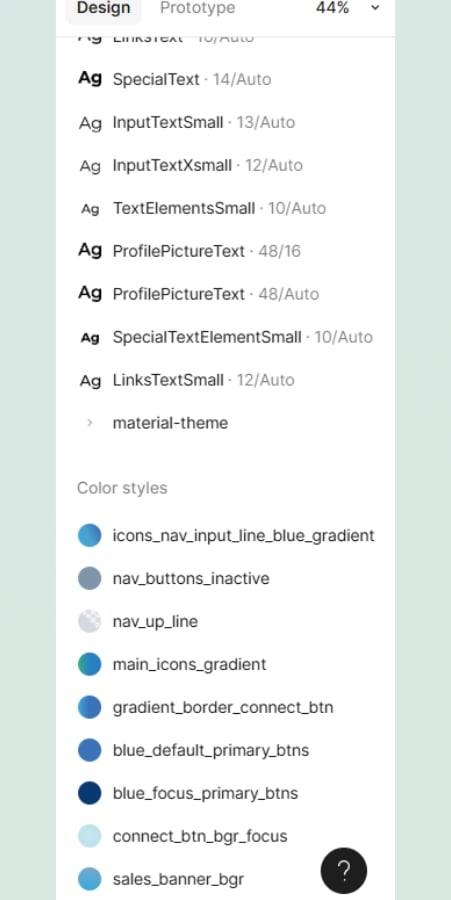
The main work was on big topics as: color tokens and semantic palettes, typography scale and responsive rules; spacing, grid, and layout principles; iconography and illustration guidelines; interaction and motion principles, component library creation with usage guidelines and developer-ready specification; accessibility requirements and maintaining; documentation and governance.
1. Overview
During our product’s major redesign initiative, it became clear that we lacked a unified visual language, reusable components and shared standards. Every team was designing in isolation, resulting in inconsistent interfaces, duplicated work and slow delivery. To support the redesign and future‑proof the product, I led the creation of our first comprehensive design system. It was built from the ground up to serve as the foundation for a cohesive and scalable experience.
4. Impact
For the design system I focused on achieving several key outcomes:
Accelerating the redesign by reducing repetitive work;
Improving UI consistency across all redesigned screens;
Increasing accessibility compliance through standardized rules;
Strengthening brand cohesion across the entire product ecosystem;
Boosting team efficiency with reusable components and clear guidelines.
These priorities ensured the system delivered immediate value with a strong foundation for future growth.
5. Outcome
The system became a living product rather than a one‑off project. Building it from scratch during a redesign requires balancing speed with structure. The most valuable outcome wasn’t just the system itself, but the shared alignment it created across teams. A flexible, maintainable design system that became the backbone of the redesign. As a result it became the long‑term asset for the organization.
Audit existing product & identified gaps
Define design foundations & standards
Built reusable components & tokens
Document usage, accessibility & guidelines
Establish governance & cross-team alignment

Contact
Interested in working together? Let's chat about it.
© 2026. All rights reserved.
+359 887 792 900

